What are the top attractions in AlUla?
Five: Hegra (Mada'in Salih), the first Saudi World Heritage site; Dadan and Jabal Ikmah; Elephant Rock; Old Town with the oasis; and Maraya in Ashar Valley. All five fit into two days.
AlUla is a county in northwest Saudi Arabia where Hegra (Mada'in Salih), the first Saudi site on the UNESCO World Heritage List, sits beside palm groves, wind-carved sandstone mountains, an old town of mud and stone, the mirrored hall Maraya, and a festival calendar that peaks in winter. This page gathers every major thing to do in AlUla into clear groups, with enough on each to decide whether it belongs in your trip and a link to its detailed guide. Facts come from the official Experience AlUla platform or the World Heritage List; no prices, no seasonal dates.
Five things to do in AlUla: the official Hegra tour, Dadan and Jabal Ikmah on a second morning, sunset at Elephant Rock, an evening in Old Town and the oasis, and Maraya when an event is on. Two days cover the five, a third adds the desert, and October to March is the time.
How to use it: the first five sections cover the places; the next eight turn them into a plan: timing, arrival, tickets, clothing, children, private or group, two days, company trips. Each links to its detailed guide and the journeys page that fits.
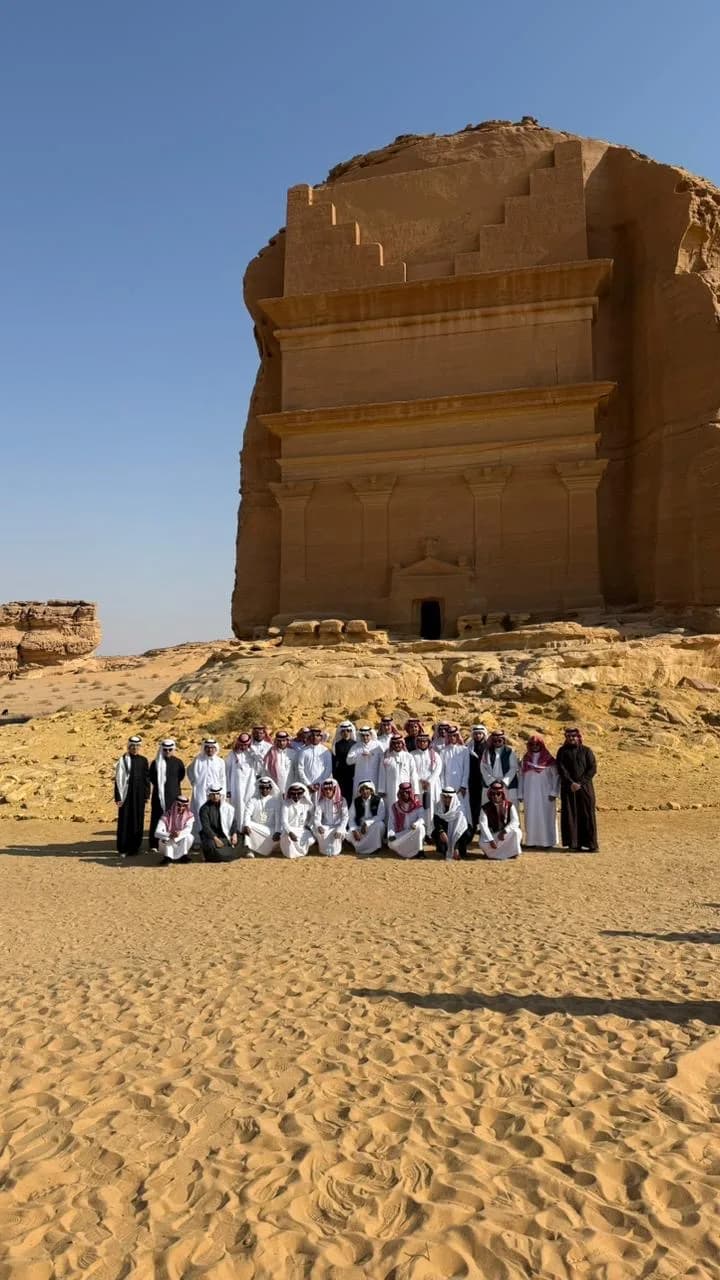
AlUla's archaeological heart is three neighboring sites north of town. Hegra is a Nabataean city of 111 monumental rock-cut tombs, 94 with decorated facades, and the first Saudi site on the World Heritage List. Dadan was the capital of the Dadan and Lihyan kingdoms before the Nabataeans, with the Lion Tombs in its red cliff. Jabal Ikmah is a canyon of hundreds of inscriptions in ancient Arabian scripts, listed on the Memory of the World Register. None can be visited in your own car: entry is on an official guided tour booked through Experience AlUla.
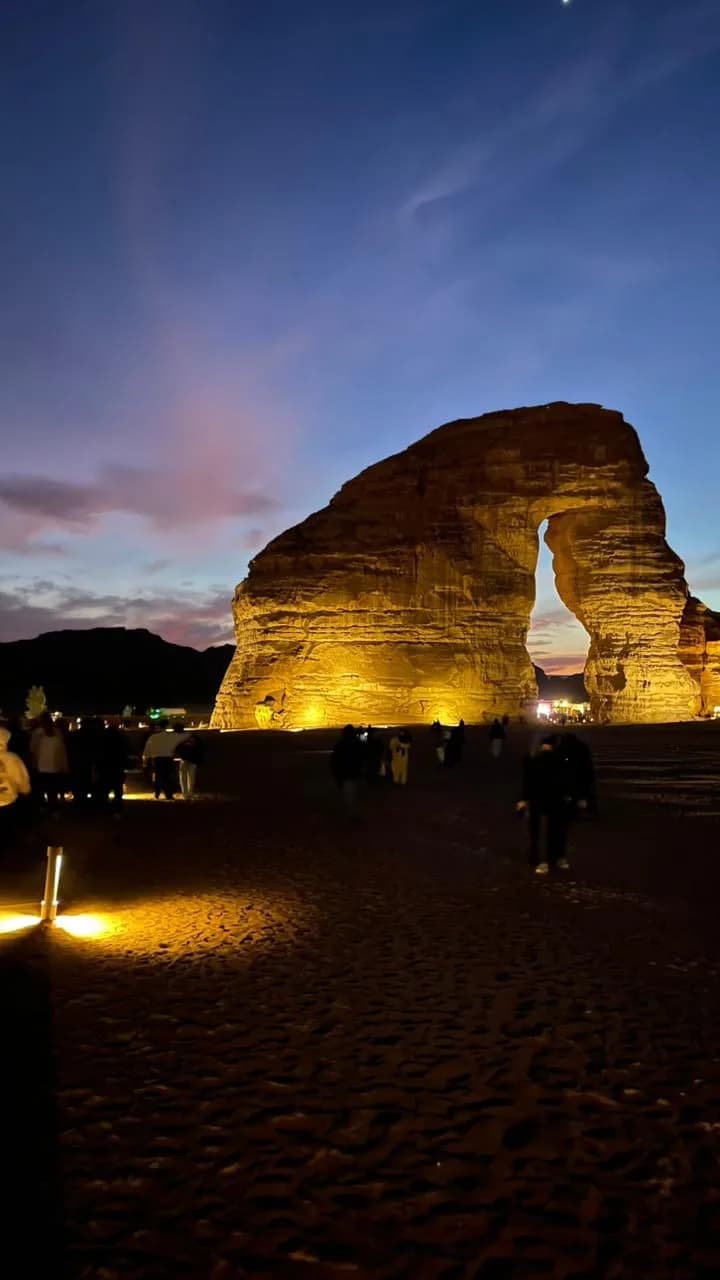
AlUla's look comes from its rock: sandstone carved by rain, wind and sand into shapes known by name. The most famous is Elephant Rock, which resembles an elephant with its trunk on the ground, about 52 meters high according to the official platform and about 20 minutes by car northeast of Old Town. You drive there yourself, with parking and a boardwalk; it welcomes visitors from late afternoon until midnight, is lit after dark, and has seating and fire pits. No climbing.
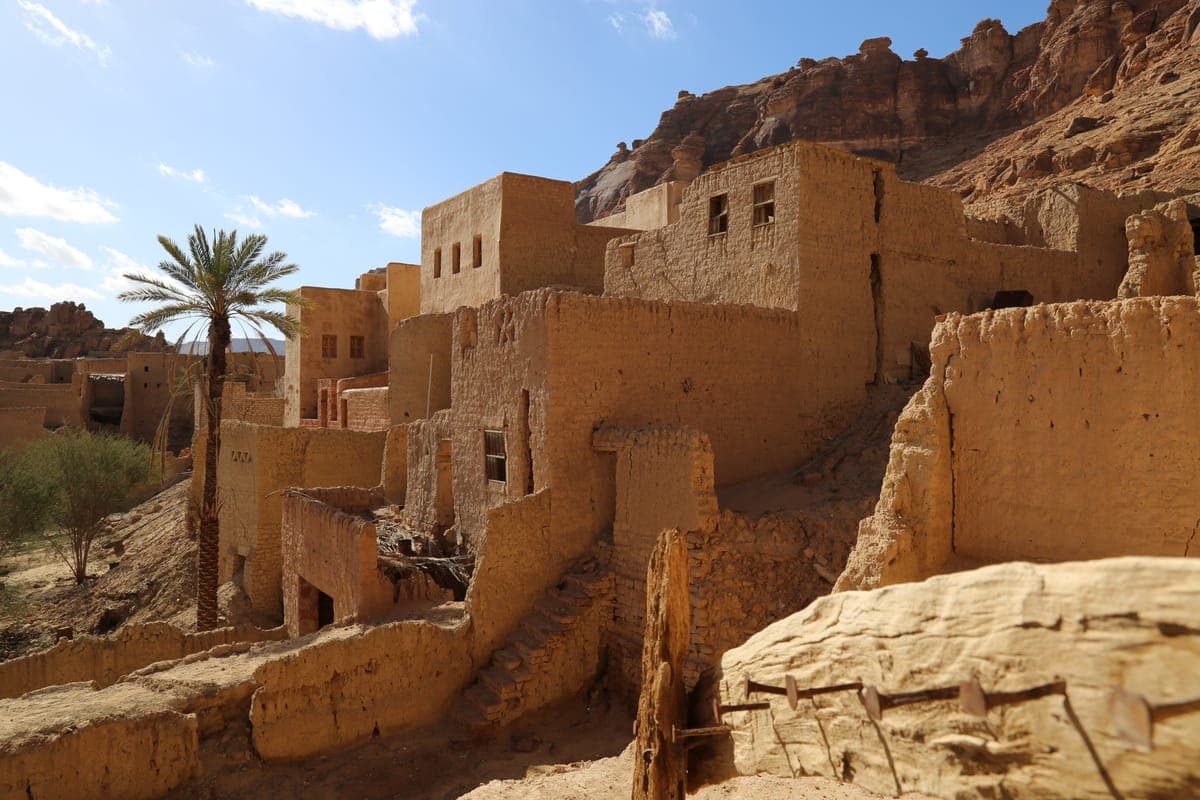
Old Town is a dense fabric of mud and stone houses beneath its historic fort, with the Tantora at its heart: the sundial residents once used to mark the start of the winter planting season, and the namesake of AlUla's biggest festival. Its official page lists it as free and open to all; it comes alive after mid-afternoon and runs into the night. The AlUla Oasis lies nearby, its trails free and open day and night.
Maraya is a concert and events hall in Ashar Valley, about 20 minutes by car from the center of AlUla, and holds the Guinness World Records title for the largest mirrored building in the world. You enter with an event ticket, on the official guided tour when offered, or with a rooftop restaurant reservation; the valley itself needs a ticket, a booking or an invitation. The calendar peaks with Winter at Tantora, usually mid-December to early January.
Between the sites lies a desert that is used, not just looked at: hiking trails between the mountains, open-vehicle outings in the sand, sunrise hot-air balloon flights (they feature in the official summer itineraries), and clear nights for stargazing. Experiences and schedules change with the season, so we fix none here.
The mild season runs from October to March and peaks from December to February, with pleasant days and distinctly cold nights; these months open the whole day to the sites. From June to September the midday heat is intense, so the day is built on sunrise and evening, yet the official platform publishes summer itineraries. No temperatures here: the platform shows a live forecast, not monthly averages.
AlUla's air gateway is AlUla International Airport (IATA code ULH), about half an hour from the center. By road, the official platform puts AlUla at about three hours from Madinah or Tabuk, with most sites 30 to 60 minutes apart, so you need a car or organized transport. Visitors from abroad enter on a Saudi tourist visa; English is widely spoken, cards are widely accepted, and dress is modest and comfortable.
Three tiers. Hegra, Dadan and Jabal Ikmah: official tour only, booked through Experience AlUla, and booking ahead is strongly recommended because daily tours are limited. Maraya: an event ticket or its guided tour. Old Town and the oasis: free, and the Elephant Rock page lists no ticket. Prices are on the platform and change with the season, so we do not quote them. CHAPTERS does not sell these tickets on their own: when one of its published journeys lists entry tickets among its inclusions, the tickets for the sites in its program are part of the journey and we arrange them, while for the Maraya hall the journey's own page is the reference for whether entry is included; otherwise we time the journey around the slots you book.
The rule is the same all year: layers. Light long-sleeved fabrics for the day, a genuinely warm layer for evenings from December to February, and closed shoes for the sites, where the ground is sand, gravel and rock. The official platform notes that dress is modest and comfortable, that women need no abaya or headcover, and that places of worship require modest dress.
AlUla works for families when the day is built around the child's age, not the number of sites. Young children need one main experience, shade and rest; school-age children can pair a heritage site with a light activity; teenagers can help choose the route. The official site pages state that children aged four and under join the heritage tours free.
A group tour gives you published departures and a lower cost per seat; a private journey gives you your own pace, your own guide and flexibility. Real luxury in AlUla is less friction, not a handsome car: a program built around the guest, a clear role for the guide, written transport and entry arrangements, and a fallback plan for the weather. Read the actual offer before you book.
| Question | Group tour | Private journey |
|---|---|---|
| When does it suit you? | A solo traveler or couple who want Hegra and Old Town simply | A family, friends, or anyone who wants their own pace and guide |
| What do you fix? | A published departure and limited seats | Your own dates and meeting point |
| What do you read first? | What the seat includes and where it departs | What the program includes and excludes, in writing |
Two days is the length at which AlUla fits its five major places without exhaustion, provided they are arranged by light and by time slot rather than by map. This is the rhythm as we schedule it:
AlUla has what a team retreat needs: scenery that takes people out of the office rhythm, sites visited together, and open-air evenings that gather rather than scatter. A good program is built around one clear goal, such as strengthening communication, rewarding employees, hosting a client or giving leadership room to think, and only the places that serve it are chosen. There is no fixed package.
Five: Hegra (Mada'in Salih), the first Saudi World Heritage site; Dadan and Jabal Ikmah; Elephant Rock; Old Town with the oasis; and Maraya in Ashar Valley. All five fit into two days.
Two: Hegra, Elephant Rock and Old Town on the first; Dadan and Jabal Ikmah, the oasis and Maraya or an evening on the second. A third day adds the desert or a margin for weather.
No. The official page states that self-driving is not allowed and that the visit is on an official guided tour booked through Experience AlUla, with booking ahead strongly recommended. The same applies to Dadan and Jabal Ikmah.
October to March, peaking from December to February with distinctly cold nights and the events season. Summer works with an inverted rhythm: sunrise and evening, with rest at midday.
Old Town and the AlUla Oasis are free and open to all according to their official pages, and the Elephant Rock page lists no ticket. Hegra, Dadan and Jabal Ikmah take an official tour, and Maraya an event ticket.
Not as a member of the public. Its official page states that entry is with an event ticket, on the official guided tour when offered, or with a rooftop restaurant reservation; the valley itself needs a ticket, a booking or an invitation.
Yes, when the day is built around the child's age: one experience and rest for young children, a heritage site plus a light activity for school-age children, a say in the choices for teenagers. Children aged four and under join the heritage tours free.
CHAPTERS is a tour operator in AlUla: a journey includes transport from the agreed meeting point, a guide and the accommodation named in the program. We do not sell standalone site tickets, flights or visas; but when a published journey lists entry tickets among its inclusions, the tickets for the sites in its program are part of the journey and we arrange them, and otherwise the journey is built around the official tour slots you book in your name on Experience AlUla. Check each journey's page for what it includes.
Send your possible dates, the number of guests and which places matter most, and we reply with a program that puts each place in its finest hour, plus the official tour slots to book.